

Published · 16 April 2025
Zero-waste kitchen: design tips for a sustainable home
The zero-waste lifestyle is becoming ever more popular — and not by accident. A consciously designed kitchen is not only attractive and functional but also contributes to a more sustainable, environmentally aware life. The good news is that you don’t have to give everything up — you just have to plan cleverly. In this article we show how to create a kitchen where practicality and environmental awareness go hand in hand.
1. Waste separation — right from the design stage
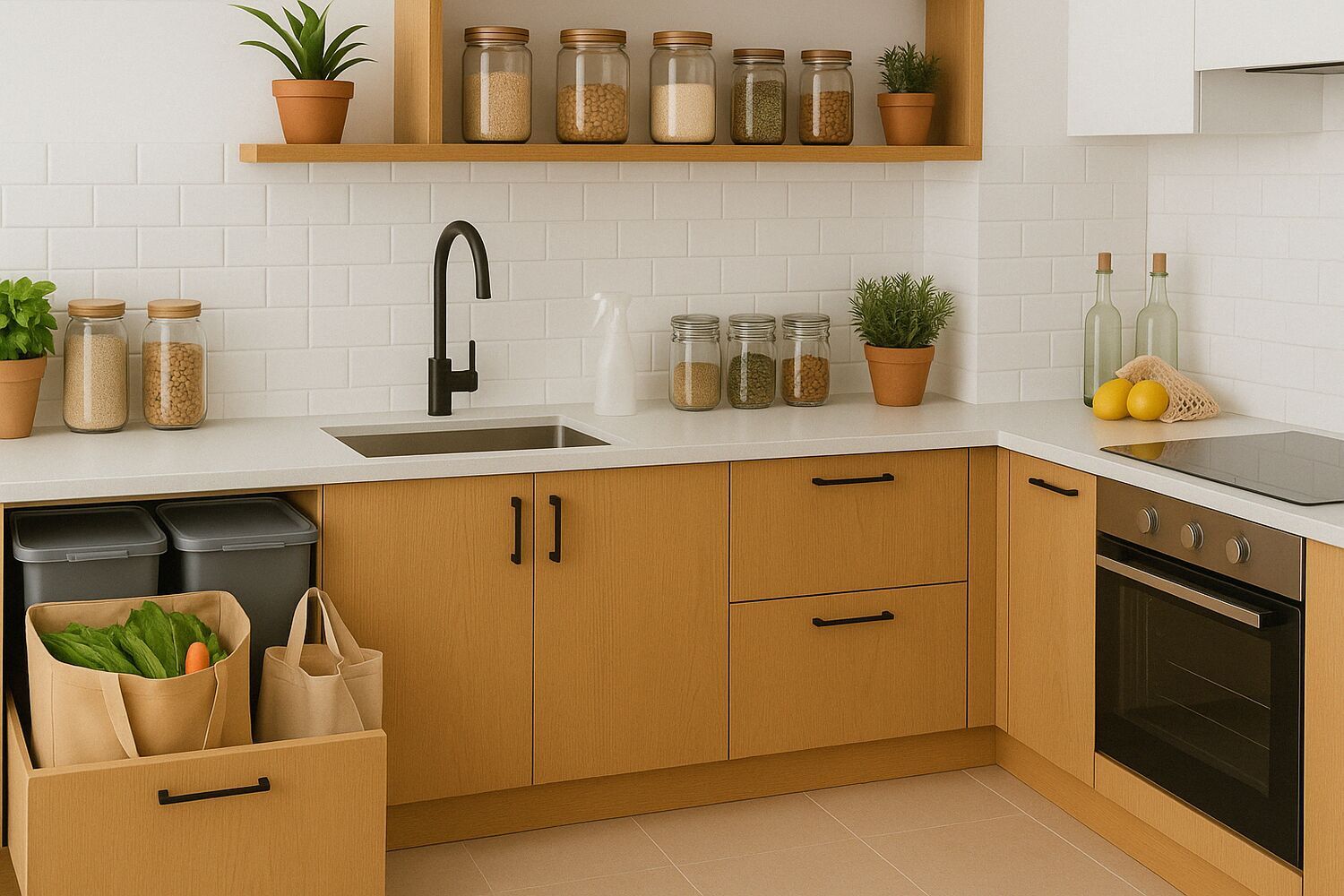
The kitchen generates the most waste in the home, so think about separated storage as early as the joinery stage. Create several compartments:
- for paper, plastic and glass,
- for compostable waste (with a built-in composting bin if possible).
Extra tip: keep cloth bags, beeswax wraps and refillable bottles in a dedicated drawer.
2. Natural and durable materials
Say goodbye to disposable plastics. Choose instead:
- bamboo or wooden chopping boards,
- stainless steel or glass storage containers,
- furniture made from natural materials, recycled where possible.
This is not only environmentally friendly but stylish too — and more cost-effective in the long run.
3. Energy-efficient appliances — a smart decision
The technology in a modern kitchen can be green as well:
- Choose A+++ rated domestic appliances.
- Use a water-saving dishwasher and a touch-controlled tap.
- A built-in water filter reduces consumption of bottled water in plastic.
4. Clean solutions: eco-friendly cleaning products
Set aside a shelf or drawer for environmentally friendly cleaning products:
- vinegar, bicarbonate of soda and lemon juice — the natural trio,
- refillable glass spray bottles.
Cleanliness need not come at the environment’s expense.
5. Conscious shopping = an orderly pantry
If your shopping is deliberate, your kitchen becomes easier to keep on top of:
- store dry goods in jars or metal tins,
- use labels to keep things organised,
- plan ahead with a weekly menu → less food thrown away.
In a smaller pantry, pull-out or carousel shelving works well.
A zero-waste kitchen is not a dream but a series of conscious decisions
A waste-free lifestyle is not about everything being perfect — it is about making better decisions day by day. If you take zero-waste principles into account when designing your kitchen, you create a space where sustainability and functionality meet — and where it is simply good to be.
You can find more tips on furnishing your kitchen consciously here: Designing the perfect kitchen.
Knowledge base
More articles
How can this home become yours?
Get in touch and our colleague will answer every question — from financing to the technical specification.